

Retail in Crisis: Why City Centers Will Continue to Lose Stores in 2026
The economic situation in the German retail sector remains tense—and the consequences have long been evident in many city centers. Vacancies, store closures, and a noticeable decline in consumer confidence characterize the landscape. Current forecasts paint a clear, if alarming, picture for the year 2026.
Dramatic Decline: Thousands of Stores Facing Closure
 According to the latest figures from the German Retail Association (HDE), around 4,900 stores in Germany will close this year—even after taking new store openings into account. The actual number of closures is therefore significantly higher.
Particularly alarming: For the first time, the total number of brick-and-mortar stores could fall below 300,000 —specifically to about 296,600. Ten years ago, that number was still around 367,000. This means that roughly one in five retail locations has disappeared within a decade.
For years, Germany has been losing at least 4,500 stores annually—and during the COVID-19 pandemic, the number rose to more than 11,000.
Causes: Succession issues, bankruptcies, and a lack of prospects
 There are many reasons for the decline of brick-and-mortar stores:
- Lack of Succession Plans for Owner-Managed Businesses
- Declining profitability and an uncertain future
- A rise in bankruptcies, particularly among small businesses
A study by Creditreform shows that business insolvencies rose significantly in 2025. The sectors hardest hit were micro-enterprises, the manufacturing sector, and the retail sector. In the retail sector alone, insolvencies rose by more than 10 percent.
Allianz Trade also confirms this trend: Between August 2024 and August 2025, 2,490 retail bankruptcies were recorded—just slightly below the nine-year high.
Sluggish consumer spending is putting additional strain on the retail sector
In addition to structural problems, the retail sector is suffering greatly from weak demand. Consumer sentiment remains subdued—and a quick recovery is not in sight.
 The economic conditions speak for themselves:
- According to forecasts, the inflation rate is expected to be 2.8% in 2026
- A further increase to 2.9% is expected in 2027
- Higher prices are significantly curbing private consumption.
The current trend is particularly concerning, as consumers’ income expectations are falling significantly, while at the same time about 60 percent of Germans expect energy prices to remain high in the long term. Added to this are global crises and geopolitical conflicts, which are further exacerbating general uncertainty and having an additional negative impact on consumer behavior.
City Centers in Transition: Vacancy Rates Are Rising
The consequences of this trend are plain to see in German city centers. More and more storefronts are standing empty, and entire shopping streets are losing their appeal.
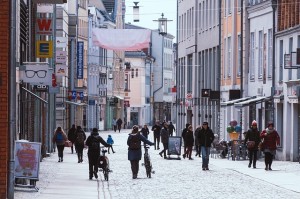 However, retail plays a central role in urban centers:
Shopping remains the main reason for visiting downtown.
If businesses are missing, this has far-reaching consequences:
- Decline in Visitor Numbers
- Fewer dining and recreational options
- Declining Quality of Life in City Centers
Europe presents a mixed picture
 A look abroad makes it clear: This trend is not a problem unique to Germany—but neither is it an inevitable fate.
While Germany continues to see rising insolvency figures, other countries are already showing positive trends:
- France: -2% in bankruptcies
- Netherlands: -23%
- United Kingdom: -10%
These developments at least give reason to hope that stabilization will be possible in Germany as well in the medium term.
